Description
About the company
Emporia is hiring a Growth Strategist for our subscription pet care brand, generating US$2.25M in monthly recurring revenue (MRR) across France, Switzerland, the Netherlands, the UK and Germany. Meta is our main acquisition channel. We share the brand name during the first conversation.
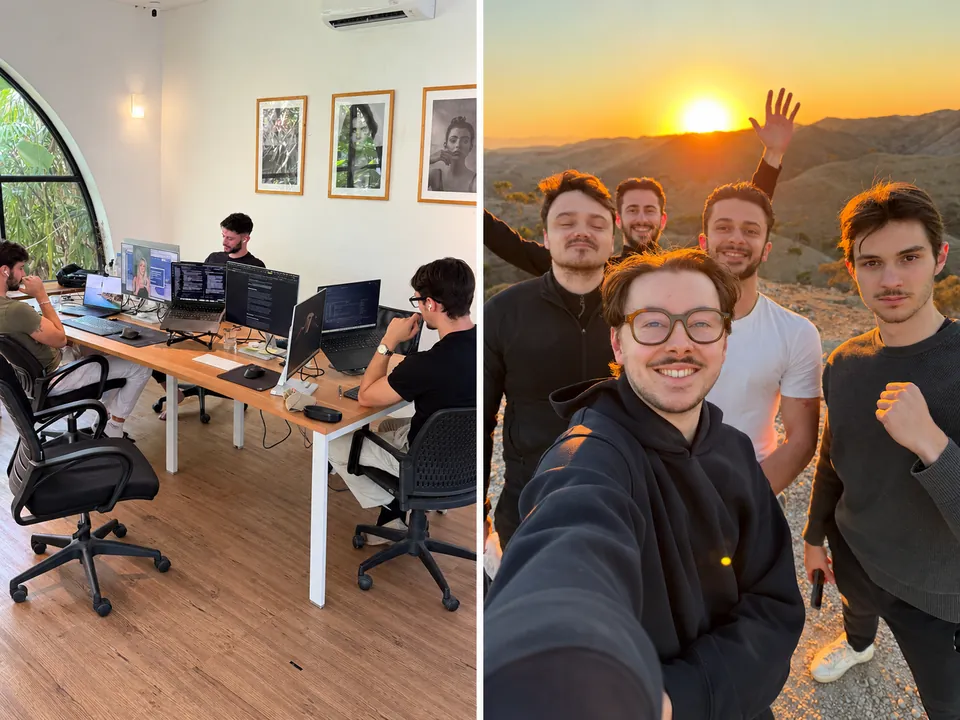
Location: Remote or office. Work remotely or join the team in our office. Working overlap and commitment will be agreed together.
Your mission: lead the people and decisions that turn creative, paid media, conversion and retention into profitable growth. This Growth Strategist role carries a hands-on growth leadership mandate: own the plan, build the team and drive execution from the first ad through subscription renewals.
Why this role exists
We have an established creative team, a growing creator program, channel specialists, internal dashboards and a forecast connected to cash flow. The founder still connects too many of the decisions himself. You will take ownership of that work: deciding where to invest, understanding what is holding growth back, and turning the answer into a plan the team can execute.
Your strongest foundations should be creative strategy, hands-on media buying and people leadership. You can recognise why an ad works, turn that insight into better briefs, make sound budget decisions and get a team to deliver. You also understand CRO and CRM well enough to set priorities and challenge specialist recommendations.
You will work directly with the founder, who stays involved in strategy, mentoring and major decisions. You take the lead on day-to-day growth priorities, team performance and follow-through, so progress no longer depends on the founder connecting every function himself.
This could be the next step for an agency growth leader, an in-house DTC operator or a former founder who wants to build inside an established business. What matters is evidence that you can combine creative and commercial judgment with real team leadership.
Your scorecard
1. Own the forecast and the economics
Maintain a rolling growth forecast by market and channel, translating annual goals into quarterly priorities, monthly plans and daily expectations. Connect spend, new customers, acquisition cost, subscription cohorts, contribution margin and cash requirements. Align the model with launches, promotions and seasonal demand. Explain the gap between plan and actuals, identify the underlying drivers and assign corrective actions.
Success looks like: one agreed plan; a weekly variance review with decisions, owners and deadlines; a monthly reforecast with explicit assumptions. Growth is assessed against contribution and payback targets agreed with the founder.
2. Allocate spend to incremental, profitable growth
Set budget and efficiency targets across markets and channels. Combine platform reporting, blended business results, cohort economics and incrementality evidence to decide where the next dollar should go. Account for attribution overlap, diminishing returns, customer quality and cash constraints.
Success looks like: budget decisions supported by a clear commercial rationale; a measurement plan proportionate to our scale; documented findings that change allocation. Know when a lift test is useful, what it can establish, and when the evidence remains inconclusive.
3. Turn account insights into better creative investment
Study winning and losing ads, customer interviews, reviews and objections with the creative team. Turn what you learn into new angles, hooks, stories, offers and formats. Give specific feedback on scripts and briefs, and connect creative strategists, editors, creator management and media buyers in a continuous test-and-learn loop.
Success looks like: customer insights become briefs, launches and documented learning that improves the next round of creative. Track performance by launch cohort, format, angle and production team; build new winners while reducing dependence on ageing ads or a single creator. Evaluate production costs alongside contribution and acquisition quality, rather than treating spend share as proof of success.
4. Keep Meta execution and measurement accountable
Challenge account structure, testing, bidding and scaling decisions from firsthand experience. Be able to diagnose an account and execute when needed, while coordinating clearly with dedicated media buyers and the Google specialist. Own the measurement priorities with technical support: conversion signals, event quality, subscription versus first-order data, and the business case for testing predicted lifetime value.
Success looks like: when results fall behind plan, you can move from diagnosis to a concrete change in the account, working with the media buyer to implement and evaluate it. Keep named owners for account operations and tracking fixes, a prioritised signal audit and controlled tests with explicit decision criteria. Evaluate a higher CAC against realised customer value and payback, rather than assuming it is automatically good or bad.
5. Own the connection between conversion and retention
Build one prioritised roadmap with CRO and CRM specialists: offers, landing pages, checkout, post-purchase upsells, onboarding, lifecycle messaging and subscription retention. Find the largest commercial constraint and move quickly from diagnosis to a test with an owner, hypothesis, budget, primary metric and decision rule.
Success looks like: acquisition gains hold up after the first order. Review conversion, average order value, cohort retention, realised customer value and payback together. Scale, stop or refine tests based on their effect on contribution and customer behaviour. Specialists implement within their expertise; you own the priorities and the follow-through.
6. Make the team effective without daily founder intervention
Lead the weekly growth review and turn priorities into clear responsibilities, deadlines and feedback. Coach specialists, address performance gaps early, and lead recruitment and onboarding for agreed growth-team hires. Build the right mix of in-house talent, creators and external specialists, with enough capacity to keep execution moving.
Success looks like: the team delivers agreed priorities, improves from feedback and resolves routine decisions without waiting for the founder. Reviews surface results, trade-offs and exceptions; documentation makes the work repeatable without adding unnecessary process.
7. Build practical AI capability into the team
Use AI to shorten the path from research and analysis to useful action. Once you understand the business and its bottlenecks, define the role, lead the recruitment and develop an AI Growth Engineer, working with the founder to agree hiring priorities and resources. Give that person a focused backlog across creative feedback, CRO and CRM.
Success looks like: small projects reach actual use and demonstrate better decisions, faster execution or measurable commercial results. You set the business problem and validate the outcome; the engineer handles technical implementation. You do not need to be a software engineer yourself.
How success will be measured
- Forecast reliability: track forecast error by market and month, explain material misses and improve the model. Agree accuracy tolerances after validating the baseline.
- Profitable scale: grow contribution after acquisition costs while meeting agreed customer acquisition, payback and cash targets.
- Investment quality: increase spend where incremental returns justify it and reduce investment where the economics no longer work.
- Execution: turn performance gaps into owned actions and complete the highest-impact weekly priorities.
- Creative learning: turn customer and performance insights into new tests and a repeatable supply of effective creative.
- Customer value: improve conversion and retention with evidence that gains support contribution and payback.
- Leadership: build a team that delivers, develops its capabilities and needs less day-to-day coordination from the founder.
How we work together
You work directly with the founder and lead across creative strategists, creative operations, creator management, media buyers, retention and technical specialists. You are accountable for priorities, team performance and the quality of the decisions connecting those functions. You stay close enough to the work to diagnose problems, give useful feedback and step in when needed. Routine ad uploads, video editing and technical implementation sit with the relevant specialists.
How we assess fit
- A short application: your most relevant role and company, plus a budget you managed or a result you achieved. Short answers are enough; links, CV, availability and compensation are optional.
- A conversation about decisions you owned, creative you helped improve, people you led and the evidence behind your results.
- A practical discussion using a shared context pack: commercial diagnosis, creative judgment, team priorities and how you would get the work done. Any substantial trial work will have its scope and terms agreed beforehand.
Requirements
- Established DTC experience: typically 4+ years in e-commerce growth or performance marketing, with direct responsibility for acquisition and business results. Show us the starting point, your decisions and the outcome.
- Experience at meaningful scale: you have personally managed at least US$100,000 per month in paid media and can explain how you protected efficiency as spend increased. State whether that was one brand or a portfolio.
- Hands-on Meta foundations: you have operated accounts yourself and remain fluent in testing, bidding, scaling and creative analysis. You can distinguish your own contribution from work delivered by colleagues.
- Financial fluency: you can build and challenge a forecast, explain contribution margin, reason about subscription retention and LTV, and connect CAC to payback and cash flow.
- Measurement judgment: you understand the limits of platform ROAS and multi-touch attribution, can reason about incrementality and uncertainty, and know which evidence would change your recommendation.
- Creative depth: you have personally shaped direct-response concepts, scripts or briefs, given useful feedback and used customer research to improve performance. You can explain the hook, story, offer and customer objection behind an ad's result.
- Proven people leadership: you have led specialists, set clear expectations, coached their work and handled missed targets. Bring an example of a hire, a person you developed or a team-performance problem you resolved.
- CRO and CRM fluency: you understand how offers, funnels, lifecycle messaging and retention affect subscription economics. You can prioritise and evaluate specialist work; deep implementation expertise in every discipline is not required.
- Ownership and communication: you write clearly, move quickly, close loops and challenge assumptions constructively. You are comfortable working in English with a distributed team.
The way you work matters
Experience matters, and so does the way you approach the work. In the founder's own words, this is the person we want on the team:
- Hungry — you want to build something, take ownership and see the results of your work.
- Fast learner — you pick up unfamiliar topics quickly, learn from other operators and put new ideas into practice.
- Ai native (how do you work with AI) — AI is already part of how you work. Come ready to show us concrete examples of how you use it to research, analyse, create or execute faster.
- Curious — you study ads, ask why something works, exchange ideas and test what you learn. You change your mind when the evidence changes.
- Hands on in everything, not corporate CMO mentality — you get into the work across creative, acquisition, conversion and retention. You work with specialists, but you can investigate a problem and help get it solved yourself.
- (Previous xp in subscription is a plus) — experience with recurring revenue, customer retention and subscription economics will help you get up to speed.
- Nice love the guy — someone we enjoy working with: kind, straightforward, supportive of the team and open to honest feedback.
- Makes things happen, compress delays, fast mover, allergic to corporate, ppls saying it's impossible and things happening slowly — you challenge unnecessary waiting, find a practical way forward and turn decisions into action. You flag blockers early and take responsibility for getting things done.
Especially relevant: an agency operator who grew into team leadership; an in-house DTC growth leader; or a former founder with strong creative and paid-media experience. European market experience is helpful but not required.
For the conversation, bring examples of a business or budget decision you owned, creative you materially improved, and a team you made more effective. Anonymised examples are welcome. We care about the work and your personal contribution more than a title, client logos or an online following.
What we offer
- Direct access to the founder and meaningful ownership of the growth agenda.
- An existing foundation: creative specialists, channel expertise, a creator program, internal reporting and automation to build on.
- Five markets with different levels of maturity and opportunities to learn across them.
- Room to build: shape the growth team, improve how creative and commercial decisions connect, and develop practical AI capability with dedicated technical support as the team grows.
- Remote or office: choose remote collaboration or work alongside the team in our office, with commitment, working overlap and compensation agreed together.
Compensation: Compensation and commitment will be agreed together based on experience, ownership and scope.
Sound like you?
The application takes about ten minutes. Every one is read.
ApplyRemote · Long-term · commitment to be agreed · Remote or office